
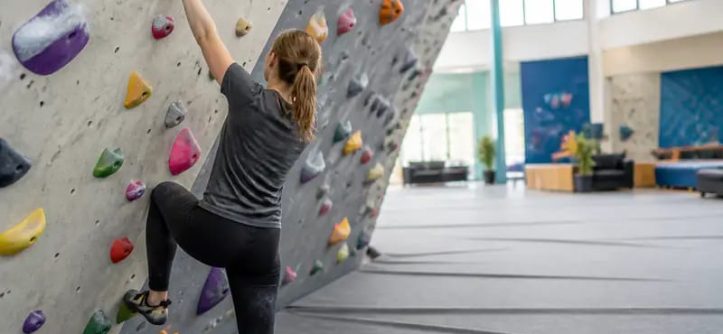
Indoor climbing is now a huge sport for people of all fitness levels. We will examine whether or not climbing could be a good option for people of all ages and fitness levels.
You Don’t Need Existing Fitness
Most climbing walls have routes for complete beginners and are designed with new climbers in mind. The easiest routes are generally designed to have the lowest level of physical activity to enable complete novices to complete the route without feeling any pain. As you continue to climb and complete more difficult routes your overall fitness will increase. Many regular climbers started out being barely able to touch their toes but continue to climb regularly.
It Suits People Who Dislike Gyms
Unlike a lot of sports though, climbing is not all running round the same old route time and time again. Each route is a different puzzle to solve and the different holds provide a constant stream of new problems to be overcome. You can easily find yourself losing hours as each climb provides a unique challenge in a different and fun way.
What It Does For Fear Of Heights
Climbing is usually done close to the ground (bouldering) or up a few meters high (rope climbing). We have thick crash mats underneath the bouldering area so there’s no need for a rope or harness. The highest rope climbing is also done gradually so you get used to the height. There is also a belayer below you for your safety, and as you climb higher the climb tends to slow down. Many people find that their fear of heights eases as they get more used to climbing.
The Physical Benefits Go Wider Than Arms
Most people believe that climbing is for the arms, and the grip in particular. This is far from the case. In fact, a good climb will involve the core, legs and shoulders as well. In terms of recommended amounts of activity for adults, Sport England recommend a number of different types of activity. As climbing can be used to improve both strength and cardiovascular endurance, it can easily be used to meet a number of different recommendations. See also Climbing Wall Near Me.
The Mental Side Is Real Too
Yes, indoor climbing can be very good for focusing the mind in the short term. The style of climbing and the type of routes we have mean that you are constantly working out the next move. Often, climbers will find that they have been so absorbed in climbing that they have mentally ‘switched off’ from other things and returned to them feeling refreshed. The focus involved in climbing is different from trying to ‘switch off’ in other ways and can be very good for people.
Solo Visits Work Just As Well As Groups
Whether you come to climb alone or with friends, we have sessions to suit. Our bouldering area is the perfect place for solo visitors as you can go at your own pace without the need for a belay partner. If you are looking for Climbing Walls Near Me then check to see if the venue in question offers auto-belays for use with solo climbers.
Age, Body Type And Old Injuries Matter
All ages can enjoy climbing and the majority of body types. However, previous shoulder, wrist or knee injuries need to be considered for some moves placing more stress on these areas than others. As with many sports and activities, old injuries can affect how you participate. The British Mountaineering Council’s (BMCC) website lists registered climbing walls and the staff are usually very knowledgeable about adapting climbs for individuals with injuries and can advise prior to your visit.
Checking The Venue Is Worth Doing First
It’s worth checking out the gym before booking a session to see how they operate. Government guidance has outlined the expectations for providers of sport and recreation activities and the HSE have detailed safety standards for climbing walls in terms of the equipment to be checked and the matting to be used.
The only real way to determine whether you are to become a climber is to go to a beginner session and see how your body and your mind get on.


Leave a Reply