

Stress at work is inevitable, but burnout doesn’t have to be. Learn how to manage stress effectively with actionable strategies that prevent burnout and promote well-being.
Work stress is a common challenge in today’s fast-paced work environment. Whether it’s deadlines, excessive workload, or interpersonal conflicts, stress can quickly escalate, leading to burnout. But here’s the good news: managing work stress without burning out is not only possible—it’s essential for long-term success and personal well-being.
This article dives into how you can manage stress at work, offering practical tips to stay productive and mentally healthy. Let’s explore effective ways to tackle stress before it turns into a full-blown burnout.
How Can I Identify Work Stress Before It Leads to Burnout?
Identifying stress early helps prevent burnout. Pay attention to physical and emotional signals, like irritability, fatigue, and constant worry.
Work stress often creeps up on you, building slowly before you even notice. Signs of stress may include:
- Feeling anxious or overwhelmed
- Physical symptoms like headaches or muscle tension
- Increased irritability or mood swings
- Difficulty focusing on tasks
Recognizing these signs early can help you take action to prevent stress from escalating. If you’re feeling these symptoms, it might be time to assess your workload, environment, and personal coping strategies before burnout becomes a reality.
What Are the Main Causes of Work Stress?
Work stress can stem from various sources, such as a heavy workload, poor time management, and lack of control. Understanding these causes is the first step in managing stress.
The top causes of work-related stress include:
- Excessive workload: When there’s too much to do and not enough time to do it.
- Poor time management: Constantly feeling behind due to poor prioritization.
- Workplace conflicts: Tension with colleagues or supervisors can contribute to stress.
- Lack of control: Feeling helpless or powerless to influence decisions affecting your job.
Once you identify the causes of your stress, you can take proactive steps to address each one, minimizing its impact on your well-being.
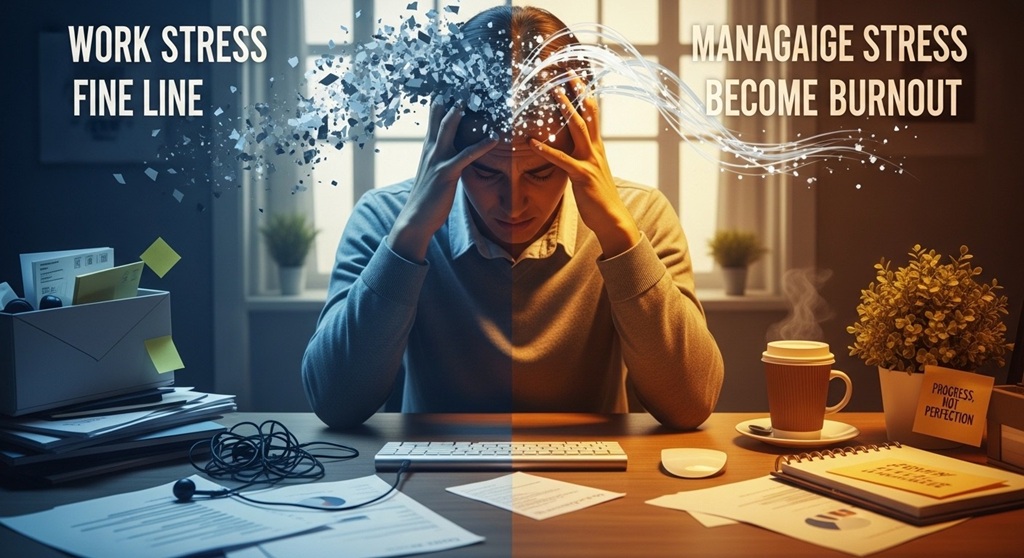
How Can I Manage Stress at Work Without Burning Out?
Managing work stress involves making smart decisions about your environment, workload, and coping mechanisms. Here are some effective strategies:
1. Prioritize Self-Care
Taking care of your physical and mental health is key to managing work stress. Make time for exercise, rest, and healthy habits.
- Exercise regularly: Physical activity reduces stress hormones and boosts your mood.
- Sleep well: Adequate sleep improves focus and productivity.
- Eat a balanced diet: Proper nutrition supports energy levels and cognitive function.
2. Set Boundaries
Setting clear boundaries between work and personal life prevents burnout. Don’t feel obligated to be available at all times.
- Set work hours: Establish fixed working hours to avoid overworking.
- Learn to say no: Don’t overcommit. Set limits to protect your time and energy.
3. Practice Time Management
Effective time management helps reduce the feeling of being overwhelmed by tasks.
- Break tasks into smaller chunks: Large tasks seem less daunting when broken down into manageable pieces.
- Use tools like to-do lists or apps: Staying organized makes it easier to track and prioritize tasks.
- Set realistic deadlines: Avoid over-promising and under-delivering by setting achievable timelines.
4. Learn Stress-Reduction Techniques
Incorporate relaxation methods to calm your mind and body during stressful moments.
- Practice mindfulness: Meditation and deep breathing exercises reduce stress and enhance focus.
- Take breaks: Step away from your desk and take short, regular breaks to recharge.
- Engage in hobbies: Hobbies like reading, gardening, or painting can be great stress relievers.
5. Seek Support
Talking to others can provide emotional relief and practical solutions to workplace stress.
- Communicate with colleagues: Sharing concerns with peers can foster camaraderie and mutual support.
- Speak to a supervisor: Let your manager know if you’re feeling overwhelmed so they can help reallocate tasks.
- Consider professional help: A therapist or counselor can guide you through stress management techniques.
What Are the Signs of Burnout, and How Can I Avoid It?
Burnout manifests as emotional exhaustion, depersonalization, and reduced performance. Recognizing burnout symptoms early helps prevent it.
- Emotional exhaustion: Feeling drained and mentally depleted.
- Depersonalization: Feeling detached from work and colleagues.
- Reduced performance: Struggling to perform tasks or lack of motivation.
To avoid burnout, take frequent breaks, ask for support, and regularly assess your workload and emotional well-being.
How Does Organizational Culture Impact Work Stress?
An organization’s culture plays a significant role in how employees experience stress. A positive, supportive work environment reduces stress levels, while a toxic culture amplifies them.
- Positive culture: Clear communication, recognition, and a supportive leadership team promote a healthy work environment.
- Toxic culture: Micromanagement, lack of recognition, and poor communication increase stress levels.
To foster a positive culture, employers should promote open communication, recognize achievements, and ensure employees have the tools and resources they need to succeed.
Conclusion
Managing stress at work is an ongoing process, but with the right strategies, it’s entirely possible to keep stress in check and avoid burnout. By prioritizing self-care, setting boundaries, practicing time management, and seeking support, you can maintain a healthy balance between work and personal life.
Start implementing these tips today to create a work environment that supports both your productivity and well-being. If you’re feeling stressed, remember, you’re not alone, and there’s always a way forward!
Take action now: Start small by implementing one or two of these strategies to reduce stress at work today. For more tips, subscribe to our newsletter and stay updated!
FAQ Section
1. What are the best strategies for managing work stress?
The best strategies include prioritizing self-care, setting boundaries, managing time effectively, learning stress-reduction techniques, and seeking support when needed.
2. How can I prevent burnout at work?
Prevent burnout by recognizing early signs of stress, maintaining a work-life balance, taking breaks, and seeking support when overwhelmed.
3. What are the signs of work-related burnout?
Signs of burnout include emotional exhaustion, depersonalization (feeling detached), and reduced performance or motivation.
4. How can I improve my work-life balance?
Improving work-life balance involves setting clear boundaries, managing your time effectively, and making time for personal activities outside of work.
5. Is it okay to ask for help when stressed at work?
Absolutely! Asking for help, whether from colleagues or a supervisor, is a healthy way to manage work stress and prevent burnout.
6. How can employers help reduce work stress?
Employers can reduce work stress by fostering a positive organizational culture, offering support, recognizing achievements, and promoting employee well-being.
7. Can practicing mindfulness reduce work stress?
Yes, mindfulness practices like meditation and deep breathing can significantly reduce stress and improve focus at work.
Read More Also: The Truth Behind 6 Tinnitus Myths
Find out: What does a dental scale and polish involve?



Leave a Reply