

Waking up with hip pain is exhausting. It disrupts your sleep, ruins your mornings, and makes everyday movement feel like a challenge. The good news is that a simple tool — a knee pillow — can make a dramatic difference. When placed correctly, it realigns your hips, reduces pressure on your joints, and helps you sleep through the night without discomfort. This guide explains everything you need to know to use one effectively.
Understanding Hip Pain and Why Sleep Position Matters
Hip pain during sleep rarely has just one cause. It can stem from arthritis, bursitis, muscle tightness, or nerve compression. However, one of the most overlooked contributors is sleeping posture. When your body is misaligned for hours at a time, the joints and muscles bear uneven pressure. Over time, that pressure becomes pain.
The position you sleep in directly affects how your hips are loaded. Side sleepers often experience the most hip discomfort because gravity pulls the top leg downward. This rotation strains the hip flexors and the lower back. Therefore, supporting that top leg is not just helpful — it is essential for people who deal with chronic hip pain.
What Is a Knee Pillow and How Does It Work
A knee pillow is a specially shaped cushion designed to fit between the knees or thighs while you sleep. Most are contoured in an hourglass or wedge shape so they stay in place throughout the night. Unlike a regular bed pillow, a knee pillow is firm enough to hold your leg in a neutral position without flattening out.
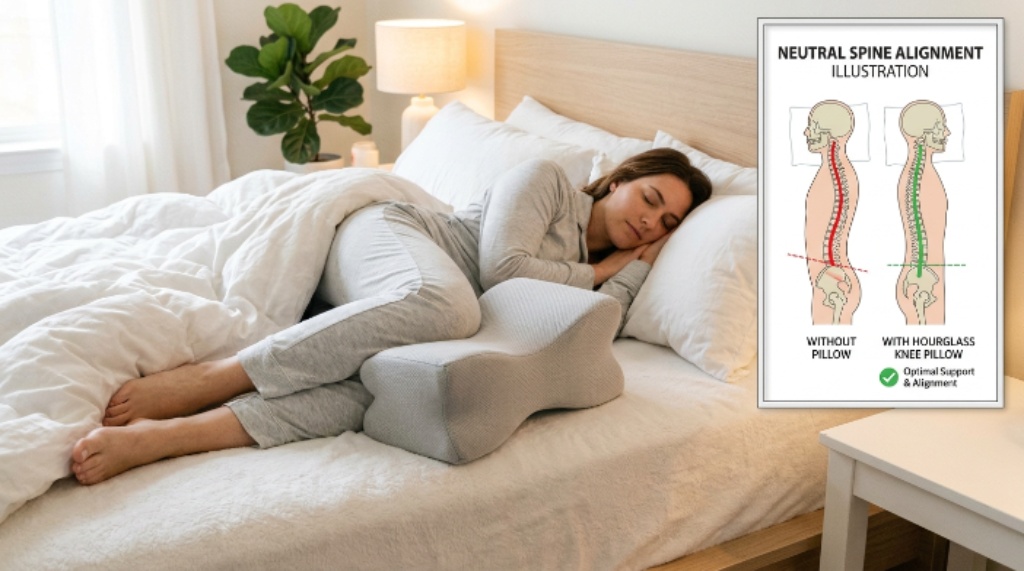
The core function of a knee pillow is simple. It keeps your knees, hips, and spine in a straight, neutral alignment. When these three points are properly aligned, the muscles around your hip joint can fully relax. Additionally, it reduces the compression that builds up in the hip socket when the top leg drops forward without support.
Many people who suffer from nerve-related discomfort find that using a sciatica relief pillow between the knees eases the pressure on the lower spine. This is because proper leg alignment reduces tension on the piriformis muscle, which often irritates the sciatic nerve when it tightens during sleep.
Who Benefits Most from a Knee Pillow
Almost anyone with hip or lower back pain can benefit. However, some groups find it particularly helpful:
- Side sleepers who wake up with stiffness in the hip or groin area
- People recovering from hip replacement surgery
- Pregnant women experiencing pelvic or hip discomfort
- Those with sciatica, herniated discs, or piriformis syndrome
- Anyone with scoliosis or uneven hip alignment
If you fall into any of these categories, a knee pillow is worth trying before considering more expensive interventions. It is a low-cost, non-invasive tool that works passively while you sleep.
How to Position a Knee Pillow Correctly
Proper placement is everything. Using the pillow incorrectly will not give you the results you need. Follow these steps for the best outcome.
The Basic Side Sleeping Position
Lie on your side with your knees slightly bent. Place the knee pillow between your knees so that it fills the gap comfortably. Your top knee should rest on the pillow without dropping forward or pulling backward. Your hips should stack directly on top of each other, neither twisting forward nor tilting back.
Make sure the pillow is thick enough to keep your top knee at roughly the same height as your hip. If the pillow is too thin, your leg will still drop. If it is too thick, your hip will tilt upward. Finding the right fit matters more than the brand or price.
For Severe Hip or Lower Back Pain
If your pain is more intense, try a slightly different approach. Hug a regular pillow to your chest while placing the knee pillow between your legs. This combination supports both your upper and lower body. It prevents your torso from rotating forward, which is a common cause of additional hip strain during sleep.
Additionally, placing a thin pillow under your waist can fill the natural gap between your side and the mattress. This keeps your spine level and takes even more pressure off the hip joint.
For Back Sleepers
Knee pillows are not only for side sleepers. If you sleep on your back, place the pillow under your knees rather than between them. This gentle elevation reduces the curve in your lower back and takes direct pressure off the hips. It is one of the simplest sleep alignment tips for back pain sufferers. However, make sure the pillow is positioned just below the back of the knees, not under the calves.
Choosing the Right Knee Pillow
Not all knee pillows are the same. Choosing the wrong one can leave you no better off than before. Here is what to look for when shopping.
Material and Firmness
Memory foam is the most popular material for knee pillows. It contours to the shape of your legs and softens with body heat. However, it should not be so soft that it collapses under the weight of your leg. Look for high-density memory foam that bounces back slowly after compression. This ensures consistent support throughout the night.
Shape and Size
Hourglass-shaped pillows are the most common. They are designed to grip the knees and prevent sliding. Wedge-shaped pillows offer a slightly different angle that some users prefer. Your body size matters here too. A pillow that works well for a petite person may not provide enough support for someone with broader hips.
Cover and Breathability
You will spend hours in contact with this pillow. Therefore, choose one with a removable, washable cover. Breathable fabrics like bamboo or cotton blends help regulate temperature, which is important if you tend to sleep warm.
An orthopedic knee cushion made with certified materials and ergonomic design will generally outperform a generic option. Look for products that mention spine or hip alignment in their design intent, as these are built with posture correction in mind.
Additional Habits That Improve Hip Pain Relief During Sleep
A knee pillow works best when combined with other healthy sleep habits. Consider these complementary steps.
Stretching before bed can significantly reduce hip tightness. A simple hip flexor stretch held for 30 seconds on each side loosens the muscles that tighten during the day. Additionally, sleeping on a mattress that is neither too soft nor too firm provides a stable base for proper alignment.
Avoid sleeping on the painful hip if possible. Give the sore side a break by sleeping on the opposite side with the knee pillow in place. Over time, this habit reduces inflammation and allows the hip joint to recover.
Also, check your mattress age. A mattress older than seven years may no longer provide the support your body needs. Even the best knee pillow will struggle to compensate for a sagging or uneven sleep surface.
How Long Before You See Results
Most people notice some improvement within the first few nights. However, the full benefit often takes one to two weeks of consistent use. Your muscles and joints need time to adapt to the new alignment. Therefore, do not give up after just one or two nights if the results are not immediate.
If pain persists or worsens after two weeks of correct use, consult a healthcare provider. A knee pillow is a supportive tool, not a medical treatment. Persistent pain may require a professional assessment to identify the underlying cause.
Conclusion
Hip pain during sleep is common, but it does not have to be permanent. A knee pillow is one of the simplest and most affordable ways to address the problem. By keeping your legs, hips, and spine aligned, it reduces joint pressure and allows your muscles to fully relax overnight. Whether you choose a sciatica relief pillow for nerve-related discomfort or an orthopedic knee cushion for structural support, the key is consistent and correct use. Combine it with good sleep alignment tips, a supportive mattress, and regular stretching, and you will likely notice a meaningful improvement in both sleep quality and morning comfort.
Frequently Asked Questions
Can a knee pillow really help with hip pain?
Yes. A knee pillow helps by keeping your hips stacked and your spine neutral while you sleep. This reduces the uneven pressure that causes or worsens hip pain, especially for side sleepers.
Should I use the knee pillow every night?
Yes, for best results. Consistency is key. Using it only occasionally will not give your muscles and joints enough time to adapt to the improved alignment.
What is the best sleeping position for hip pain?
Sleeping on the side opposite the painful hip is generally recommended. Place a knee pillow between your knees to maintain alignment and prevent your top leg from pulling your hip out of position.
Can pregnant women use a knee pillow for hip pain?
Absolutely. Knee pillows are widely recommended during pregnancy. They reduce hip and pelvic pressure, which is especially common during the second and third trimesters when the body’s center of gravity shifts.
How do I know if my knee pillow is the right thickness?
When you place the pillow between your knees while lying on your side, your hips should stack directly on top of each other without tilting up or dropping down. If your top hip rises or sinks noticeably, try a thinner or thicker pillow accordingly.
Related Topics:
How to Protect Spine with the Right Office Chair
How to Manage Work Stress Without Burnout (Actionable Tips)



Leave a Reply