

Knee replacement surgery is a major procedure. Recovery takes time, patience, and careful planning. However, life does not stop after surgery. Many people need to travel for work, family, or medical follow-ups during their recovery period.
The good news is that traveling after knee replacement surgery is possible. It simply requires smart planning and the right preparation. When you take the correct steps, you can stay safe and comfortable on the road. This guide will walk you through everything you need to know, from preparing before you leave to caring for your knee at your destination.
Understanding Your Recovery Timeline
Before you think about traveling, you need to understand where you are in your recovery. Doctors generally recommend waiting at least six weeks before taking a long trip. However, every patient is different. Your surgeon knows your specific case best.
In the early weeks after surgery, your knee is still healing. Swelling, stiffness, and discomfort are all normal. Blood clot risk is also higher during this period. Therefore, rushing into travel too soon can set back your recovery or even cause serious complications.
Talk to your doctor before making any travel plans. Get a clear picture of your current progress. Ask specifically about your risk level for deep vein thrombosis, which is a blood clot in the leg. This is one of the most important travel safety tips your doctor will share with you. Once you have medical clearance, you can start planning with confidence.
Getting Medical Clearance Before You Travel
A conversation with your surgeon is not optional. It is essential. Before booking any tickets or hotels, schedule an appointment specifically to discuss your travel plans.
During this visit, give your doctor as much detail as possible. Tell them how long the journey will be. Explain whether you are traveling by car, plane, or train. Mention if you will be doing any walking or sightseeing. The more information you provide, the better guidance you will receive.
Your doctor may adjust your medications before the trip. They might also recommend compression stockings or blood thinners to reduce clot risk. Additionally, ask for a letter summarizing your recent surgery and current condition. This document can be invaluable at airports, hotels, or in case of a medical emergency during your trip.
Choosing the Right Mode of Transportation
How you travel matters greatly when you are recovering from knee surgery. Each mode of transport comes with its own set of challenges and solutions.
Traveling by Car
Car travel gives you the most control over your comfort. You can stop whenever you need to. However, sitting in a car for long stretches is not ideal for a healing knee. Plan to stop every 45 to 60 minutes. Use each stop to get out, walk a little, and stretch your legs gently.
Position the front passenger seat as far back as possible. This gives your knee more room and allows you to keep your leg in a more comfortable position. Bring a small pillow to place under your knee when needed. Avoid driving yourself unless your surgeon has specifically cleared you to do so.
Traveling by Plane
Flying requires extra preparation. Airplane cabins have limited space, and sitting still for hours increases the risk of blood clots. Therefore, book an aisle seat whenever possible. An aisle seat allows you to stretch your leg out occasionally and makes it easier to get up and walk.
Inform the airline about your condition when booking. Most airlines offer extra legroom seats or pre-boarding assistance for passengers with medical needs. Take advantage of these options. They can make a significant difference in your comfort and safety.
Traveling by Train
Trains are often the most comfortable option for post-surgery travelers. They typically offer more space than planes and allow you to move around freely. Additionally, train journeys allow you to stretch in the aisle or visit a dining car, which naturally encourages movement.
Book a seat near the aisle if possible. Choose a route with minimal transfers to reduce the amount of walking required between connections.
The Importance of Leg Elevation During Travel
One of the most critical aspects of post knee replacement recovery is managing swelling. Swelling is a normal part of healing, but travel can make it worse. Sitting for long periods causes fluid to pool in the lower leg. This is where leg elevation becomes essential.
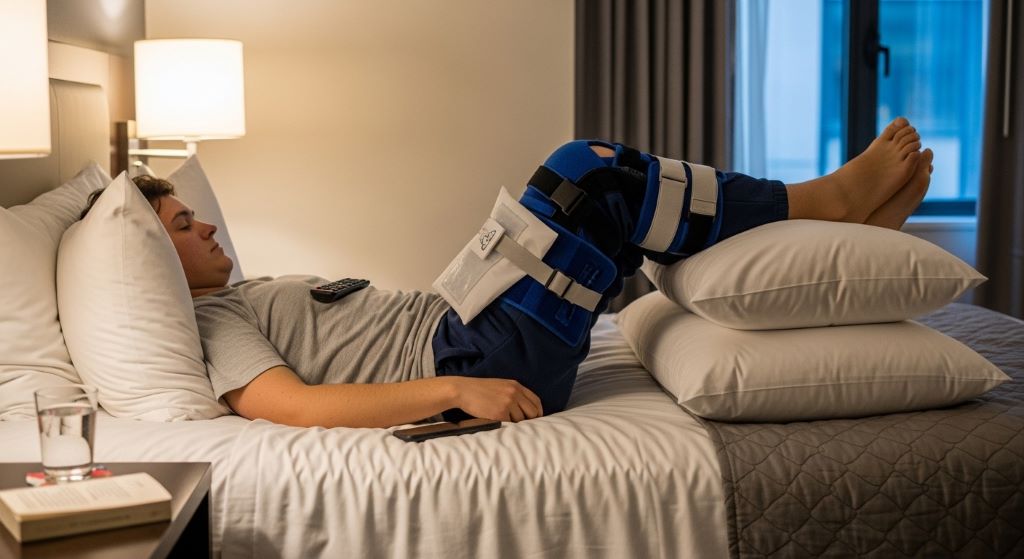
Whenever possible, raise your operated leg above the level of your heart. On a plane, this is difficult. However, you can use a footrest or a small carry-on bag under your feet to raise your leg even slightly. On a car journey, recline the seat during rest stops and elevate the leg on a folded blanket or pillow. In hotels, always rest with your leg propped up on two or three pillows.
Leg elevation is one of the most effective and simple travel safety tips for knee surgery patients. It reduces swelling, improves circulation, and helps you feel more comfortable throughout the journey. Make it a habit every time you rest, regardless of where you are.
Packing Smart for a Comfortable Journey
What you bring with you can make or break your travel experience after knee surgery. Packing thoughtfully helps you stay comfortable and prepared for any situation.
Here is what to include in your travel bag:
- Your surgeon’s contact information and medical letter
- All prescribed medications, including blood thinners if applicable
- Compression stockings, as recommended by your doctor
- A portable ice pack or cooling gel pad for swelling
- A travel pillow or small cushion for leg support
- Your physical therapy exercise sheet for in-seat exercises
- Any mobility aids such as a cane or crutches
- Comfortable, loose-fitting clothing that does not press against the knee
Keep all medications and medical documents in your carry-on bag. Never pack them in checked luggage. Additionally, bring extra supplies in case of travel delays. Being caught without your medication or compression stockings can cause unnecessary stress and discomfort.
Managing Swelling and Pain on the Road
Swelling and discomfort are common during travel, especially in the early months after surgery. However, there are several strategies you can use to keep them under control.
Start by staying well hydrated. Drinking plenty of water helps improve circulation and reduces the risk of blood clots. Avoid alcohol and excessive caffeine, as both can contribute to dehydration.
Wear your compression stockings throughout the journey. They apply gentle pressure to the leg, which helps prevent fluid buildup and supports healthy blood flow. Your doctor will recommend the right compression level for your stage of recovery.
Do gentle foot and ankle exercises regularly during the trip. Simple movements like flexing your foot up and down or making small circles with your ankle keep the blood moving. These exercises are easy to do in any seat and take only a few minutes.
If your knee swells despite these measures, apply ice as soon as you reach your destination. Keep the leg elevated and rest. If the swelling is severe, warm, or accompanied by redness, seek medical attention immediately. These can be signs of a blood clot.
Navigating Airports and Stations with Ease
Busy travel hubs can be physically challenging after knee surgery. Large airports and train stations involve a lot of walking, often across long distances. Therefore, planning ahead is crucial.
Request wheelchair assistance when booking your ticket. Many travelers feel hesitant to ask for help, but using a wheelchair does not mean you are unable to walk. It simply means you are protecting your recovery and conserving energy for what matters most.
Arrive early. Rushing through a terminal on a healing knee increases your risk of falls and overexertion. Give yourself extra time to move through security, find your gate, and board comfortably.
Use luggage with wheels and avoid carrying heavy bags on your back. Shifting weight while navigating a busy terminal puts extra strain on your knees and hips. A rolling carry-on is your best friend.
Staying Safe and Active at Your Destination
Once you arrive, your recovery routine should continue. Do not let the excitement of travel cause you to overdo it. Stick to the activity limits your doctor has set for you.
Walk on flat, even surfaces whenever possible. Avoid cobblestones, uneven terrain, and long staircases. If your destination involves a lot of sightseeing, plan rest stops every 30 to 45 minutes. Find a bench, sit down, and elevate your leg briefly before continuing.
Keep up with your physical therapy exercises at your destination. Many exercises can be done in a hotel room with no equipment. Consistency is key to a good recovery, even when you are away from home.
Stay in accommodation that suits your needs. A ground-floor room or a hotel with an elevator is important. Check that the bathroom has grab bars or a safe shower setup. Comfortable, accessible accommodation reduces your fall risk significantly.
When to Seek Medical Help While Traveling
Knowing when to get help is one of the most important travel safety tips for anyone recovering from surgery. While most travel can be done safely with preparation, complications can arise.
Seek immediate medical attention if you notice any of the following:
- Sudden or severe swelling in the leg
- Redness, warmth, or pain in the calf
- Shortness of breath or chest pain
- Fever above 101°F (38.3°C)
- Increased pain in the knee that does not improve with rest and ice
These symptoms can indicate a blood clot, infection, or other serious complication. Do not wait to see if they improve on their own. Act quickly. Before you travel, research the location of hospitals or urgent care facilities near your destination. Save the contact numbers in your phone.
Conclusion
Traveling after knee replacement surgery is absolutely possible with the right preparation. The key is to plan carefully, listen to your body, and never skip steps in your recovery routine.
Always get medical clearance before any trip. Choose transportation that gives you space to move and rest. Practice leg elevation consistently to manage swelling and improve circulation. Pack everything you need and prepare for delays. Navigate airports and stations with assistance, and arrive at your destination ready to maintain your recovery routine.
When you follow these steps, travel becomes a manageable and even enjoyable part of your recovery journey. Your health comes first, but that does not mean your life has to stand still.
Frequently Asked Questions
How soon after knee replacement surgery can I travel?
Most surgeons recommend waiting at least six weeks before taking a long trip. However, this depends on your individual recovery progress. Always get clearance from your surgeon before making any travel plans.
Is flying safe after knee replacement surgery?
Yes, flying can be safe with the right precautions. Book an aisle seat, request pre-boarding assistance, wear compression stockings, and walk the aisle every hour. Your doctor may also prescribe blood thinners to reduce clot risk during the flight.
What is the best seat to book on a plane after knee surgery?
An aisle seat is the best choice. It gives you more room to extend your leg and makes it easier to get up and move around during the flight. Bulkhead or exit row seats with extra legroom are also excellent options if your doctor approves.
How do I reduce swelling in my knee while traveling?
Wear compression stockings, do ankle and foot exercises regularly, stay hydrated, and practice leg elevation whenever you stop or rest. Applying ice to the knee as soon as you arrive at your destination also helps reduce swelling effectively.
Should I bring my physical therapy exercises with me when I travel?
Absolutely. Continuing your physical therapy exercises while traveling is important for maintaining recovery progress. Most exercises can be done in a hotel room. Ask your therapist to provide a printed or digital copy of your exercise plan before you leave.
Related Topics:
How to Protect Spine with the Right Office Chair
How to Manage Work Stress Without Burnout (Actionable Tips)



Leave a Reply