

Most people spend eight or more hours sitting at a desk each day. That is a long time to put stress on your body. Over time, poor seating choices can lead to chronic pain, stiffness, and even long-term spinal damage. The good news is that choosing the right office chair can make a huge difference. This guide will walk you through everything you need to know to protect your spine and feel better at work.
Why Your Chair Matters More Than You Think
Your spine is not designed to sit still for long periods. It has a natural S-curve that keeps your body balanced when you stand. However, when you sit — especially in a bad chair — that curve flattens or twists. This puts extra pressure on your spinal discs and surrounding muscles.
Many people overlook the chair and blame the desk or the monitor for their discomfort. In reality, your chair is the foundation of your entire workstation setup. Without proper lower back support, even the best desk setup will not save you from pain.
Understanding the Anatomy of a Good Office Chair
Not all office chairs are created equal. A chair that looks comfortable may not actually protect your spine. Therefore, it helps to know what features to look for before you buy.
A good ergonomic chair will typically offer the following:
- Adjustable seat height to match your desk and leg length
- A lumbar support feature that fits the curve of your lower spine
- A seat pan with enough depth to support your thighs without cutting circulation
- Armrests that allow your shoulders to relax naturally
- A backrest that reclines slightly to reduce spinal pressure
Each of these features plays a role in keeping your body in a neutral, balanced position throughout the day.
The Role of Lumbar Support in Spinal Health
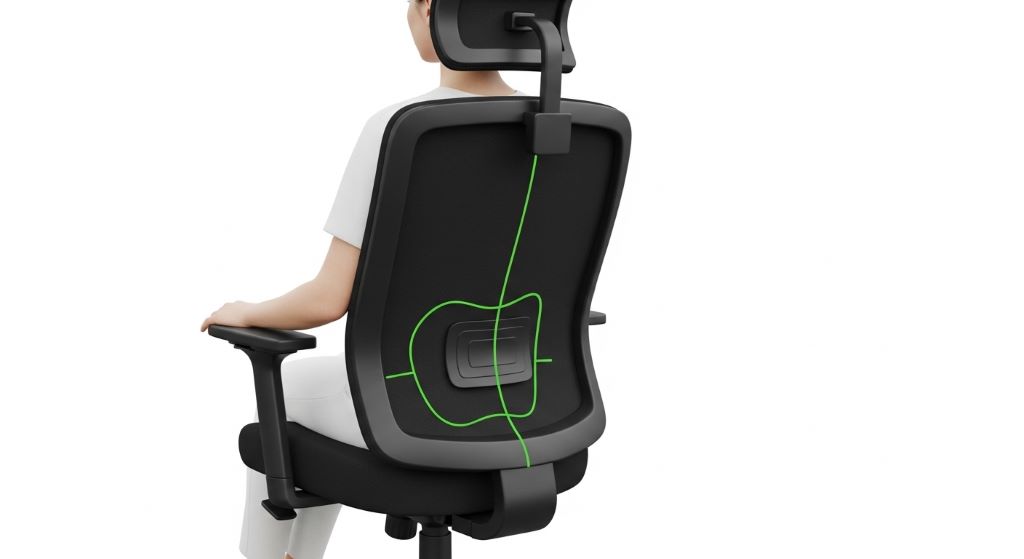
One of the most important features in any ergonomic chair is lumbar support. Your lumbar spine — the lower portion of your back — carries most of your body weight when you are seated. Without proper support in this area, the muscles and discs in your lower back are forced to compensate.
Chairs with adjustable lumbar support allow you to position the cushion or curve exactly where your spine needs it most. This kind of lower back support helps maintain the natural inward curve of your spine. It also reduces muscle fatigue, which is one of the main causes of afternoon back pain.
If your current chair lacks this feature, you can add a lumbar cushion as a short-term fix. However, investing in a proper ergonomic chair with built-in support is the better long-term solution.
How Seat Height Affects Your Posture
Seat height might seem like a minor detail. In fact, it has a major effect on posture alignment. If your seat is too high, your feet will dangle and your lower back will arch excessively. If it is too low, your knees will rise above your hips, which rounds your lumbar spine and pulls it out of its natural position.
The ideal seat height allows you to:
- Place both feet flat on the floor
- Keep your knees at roughly a 90-degree angle
- Align your thighs parallel to the ground
When these three conditions are met, your pelvis tilts forward slightly in a natural position. This automatically encourages good posture alignment without any extra effort on your part.
Seat Depth and Its Impact on Circulation
Most people never think about seat depth. However, it is crucial for both spinal health and circulation. A seat that is too deep forces you to slide forward, losing contact with the backrest and lumbar support. A seat that is too shallow puts all your weight on your tailbone.
The right seat depth leaves about two to three fingers of space between the edge of the seat and the back of your knees. This distributes your weight evenly across your thighs and sitting bones, reducing pressure on any single point.
Additionally, an angled seat pan — one that tilts very slightly forward — can further encourage a neutral spine. It keeps your pelvis in a position that supports the natural curve of your lower back.
Armrests: A Small Feature with Big Benefits
Armrests are often ignored or adjusted incorrectly. When set at the wrong height, they can cause your shoulders to hunch upward or your arms to hang awkwardly. Both scenarios lead to neck and upper back tension.
The correct armrest height allows your arms to rest comfortably while your shoulders stay relaxed and level. Your elbows should be at roughly a 90-degree angle. This takes weight off your neck and upper spine, which are common areas for tension headaches and stiffness.
Some chairs offer armrests that pivot inward, allowing you to bring them closer to your body. This is especially useful for people with narrower shoulders or those who type frequently.
The Importance of Regular Movement
Even the best office chair cannot fully protect your spine if you never move. Sitting health depends not only on how you sit but also on how often you take breaks. Research consistently shows that prolonged static posture — even in a perfectly ergonomic chair — increases spinal load over time.
Therefore, aim to stand up and move for a few minutes every 30 to 60 minutes. Set a timer if you need a reminder. Walk to the water cooler, stretch your hip flexors, or simply stand for a phone call. These small breaks allow your spinal discs to rehydrate and your muscles to recover.
Setting Up Your Chair Correctly
Buying the right chair is only half the battle. You also need to set it up properly. Here is a simple process to get started:
- Adjust your seat height so your feet rest flat on the floor
- Set the lumbar support to press gently into the curve of your lower back
- Position the backrest so you lean back at a very slight angle — around 100 to 110 degrees
- Move your armrests to a height that lets your shoulders drop naturally
- Adjust the seat depth so there is a small gap behind your knees
Once everything is in place, sit for a few minutes and notice how your body feels. Make small adjustments until you feel balanced and relaxed, without any tension pulling at your neck or lower back.
Common Mistakes to Avoid
Many people unknowingly make their back pain worse, even when they have a good chair. Here are some habits to watch out for:
- Crossing your legs, which twists your pelvis and spine
- Leaning forward toward your screen instead of bringing the screen closer to you
- Sitting on the edge of your seat and losing lumbar contact
- Ignoring discomfort and pushing through long work sessions without breaks
- Using a chair that cannot be adjusted to your body size
Avoiding these habits, combined with a well-fitted ergonomic chair, will go a long way in protecting your spine over the years.
What to Look for When Shopping
The market is full of chairs that claim to be ergonomic. However, many of them are more style than substance. When shopping, focus on adjustability above all else. A chair that fits one person perfectly may not suit another. The more adjustments a chair offers, the more likely it is to work for your specific body.
Look for chairs with at least five adjustment options: seat height, armrest height, lumbar position, seat depth, and backrest tilt. Also check the maximum weight rating and ensure the chair fits your height range.
Reading reviews from people with similar body types can also help you narrow down your options before committing to a purchase.
Conclusion
Protecting your spine starts with the right foundation — and that means choosing and using your office chair wisely. Lower back support, proper seat height, correct armrest positioning, and regular movement all work together to keep your spine healthy. Posture alignment is not something you have to actively think about when your chair fits your body correctly. Finally, remember that sitting health is a daily habit, not a one-time fix. Small, consistent changes in how you sit and move will have a lasting impact on your comfort and long-term spinal health.
Frequently Asked Questions
How do I know if my office chair is causing my back pain?
If your pain improves on days when you sit less or after you stand and move around, your chair is likely a contributing factor. Check whether your chair offers adjustable lumbar support and whether your feet rest flat on the floor.
Can an ergonomic chair fix existing back problems?
A good chair can reduce discomfort and prevent further damage. However, it is not a substitute for medical treatment. If you already have a diagnosed spinal condition, consult a physiotherapist or doctor before relying solely on a new chair.
How much should I spend on a quality ergonomic chair?
Quality ergonomic chairs typically range from $300 to $1,500 or more. You do not need to spend the most to get good support. Focus on adjustability and lumbar support rather than brand name or aesthetics.
Is it better to sit upright at 90 degrees or lean back slightly?
Leaning back at around 100 to 110 degrees is actually better for your spine. A perfectly upright 90-degree position increases disc pressure. A slight recline allows your backrest to share the load with your lumbar muscles.
Should I use a lumbar cushion if my chair does not have built-in support?
Yes, a lumbar cushion is a useful short-term solution. Place it in the curve of your lower back, not against your mid-back. Look for one that is firm enough to hold its shape throughout the day.
Related Topics:
The Ripple Effect: How a Positive Attitude Transforms Your Work Life (and Beyond)
How to Manage Work Stress Without Burnout (Actionable Tips)



Leave a Reply