
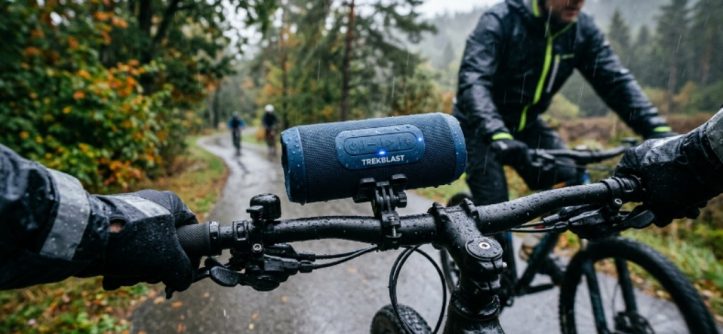
Riding with music makes every journey better. It keeps your energy up on long climbs and makes flat stretches more enjoyable. However, not every speaker is built to handle the outdoors. Rain, dust, vibration, and road splash can destroy a poorly built speaker within a few rides. Therefore, finding one that truly holds up is not just a convenience. It is a necessity for any serious cyclist.
This guide walks you through everything you need to know. You will learn what to look for, what to avoid, and how to make a smart choice that lasts for years of riding.
Why Regular Speakers Fail on Bikes
Most consumer speakers are designed for indoor use. They sit on a desk, a shelf, or beside a pool. They are not built to endure constant vibration, direct rain, or mud spray from a rear wheel. When you mount one of these speakers on a handlebar, the results are often disappointing.
Water seeps into the charging port. Dust clogs the speaker grille. Vibration loosens internal components over time. Eventually, the sound quality drops or the speaker stops working entirely. This is why cycling-specific or outdoor-rated speakers exist. They are engineered with these exact challenges in mind.
Additionally, a regular speaker that falls from a handlebar at speed rarely survives the impact. Rugged bike speakers are built with reinforced casings that absorb shock far better than standard consumer models.
Understanding IPX Ratings and Why They Matter
The most important number on any waterproof speaker is its IPX rating. This rating tells you exactly how much water and dust protection the device offers. IPX-rated bicycle speakers are tested under controlled conditions to earn these designations, so the rating is a reliable guide rather than a vague marketing claim.
Here is a simple breakdown of the most common ratings you will encounter:
- IPX4: Protects against water splashing from any direction. This level suits light rain and sweat but not heavy downpours.
- IPX5: Withstands low-pressure water jets. A better choice for wet weather riding.
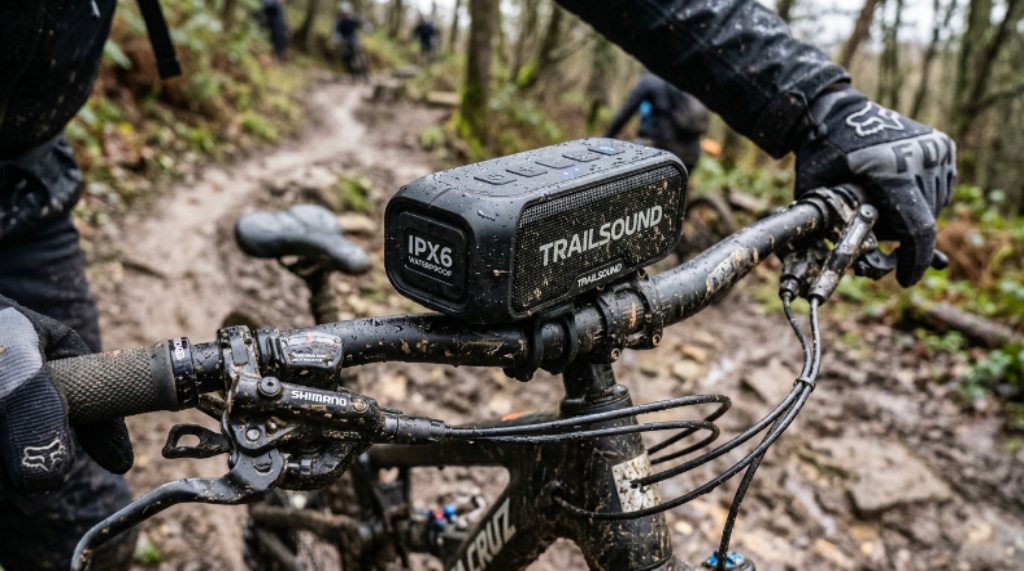
- IPX6: Handles powerful water jets. This rating suits mountain biking and heavy rain.
- IPX7: Can be submerged in up to one meter of water for thirty minutes. Ideal for extreme conditions.
- IPX8: Survives deeper submersion. Rarely necessary for cycling but offers maximum protection.
For most road cyclists, an IPX5 rating is sufficient. Mountain bikers and adventure cyclists should look for IPX6 or higher. Therefore, always check the rating before buying rather than relying on words like “water-resistant” or “splash-proof,” which carry no standard definition.
Key Features to Look for Beyond Water Resistance
Water protection is the starting point. However, a great bike speaker needs more than just an IPX rating to earn a place on your handlebars.
Sound quality matters enormously. A speaker that survives rain but sounds thin and hollow is not much of an upgrade. Look for models that mention passive radiators, dual drivers, or bass enhancement technology. These features help produce fuller sound even at moderate volume levels.
Battery life is another critical factor. A short commute might only need a few hours of playtime. However, a long-distance tour or an all-day trail ride demands ten hours or more. Many quality outdoor speakers now offer between twelve and twenty hours of battery life, which covers most riding scenarios.
Mounting systems vary widely between brands. Some speakers use universal silicone straps that fit almost any handlebar. Others include proprietary mounts that feel more secure but limit flexibility. Choose a mounting system that feels firm and does not allow the speaker to rotate or rattle during rough riding.
Additionally, controls matter when your hands are on the bars. Look for speakers with large, easy-to-press buttons that work reliably even when wearing cycling gloves. Some models include built-in microphones for hands-free calls, which adds convenience without requiring you to stop.
What Makes Weatherproof Cycling Audio Different from Standard Outdoor Speakers
Not every outdoor speaker is suitable for cycling. A garden party speaker might handle a drizzle but cannot cope with constant vibration and handlebar mounting. Weatherproof cycling audio is a more specific category. These speakers are designed to stay in place, play clearly over wind and road noise, and maintain their performance through varied weather conditions.
Cycling speakers tend to be more compact and aerodynamic. They are shaped to reduce drag and fit neatly onto handlebars without obstructing your view or controls. Many cycling-specific models also include cable routing channels or magnetic attachment points that generic outdoor speakers simply lack.
Furthermore, the speaker grilles on cycling models are typically mesh or metal rather than fabric. Metal grilles resist clogging from mud and dry quickly after a rain shower. Fabric grilles absorb water and can hold dirt in ways that degrade sound quality over time.
How to Mount Your Bike Speaker Safely and Securely
Even the best speaker fails if it is not mounted properly. A poorly secured speaker becomes a safety hazard if it falls while you are riding at speed. Therefore, spend time getting the mounting right before every ride.
Follow these steps for a secure setup:
- Choose the right position: Most cyclists mount speakers on the stem or the top of the handlebars. This placement directs sound upward and forward, which improves how much you actually hear while riding.
- Check the strap tension: Silicone straps should be tight enough that the speaker does not shift when you tap it firmly with a finger. If it moves, tighten it.
- Test before riding: Give the speaker a firm shake after mounting. If it rattles or slides, reposition it before heading out.
- Avoid blocking controls: Make sure the speaker does not cover your brake levers, gear shifters, or any other essential handlebar controls.
- Recheck after rough rides: Vibration from uneven terrain can loosen straps over time. Get into the habit of checking the mount after every off-road session.
Top Mistakes Cyclists Make When Buying Bike Speakers
Many cyclists end up disappointed not because they bought a bad product but because they bought the wrong product for their riding style. Avoiding these common mistakes saves you money and frustration.
The first mistake is ignoring the IPX rating entirely. Some buyers focus only on sound quality or price and overlook protection ratings. Then they are surprised when a light shower damages their speaker.
The second mistake is buying a speaker that is too large. A heavy or bulky speaker throws off the balance of your handlebars and creates unnecessary wind resistance. Compact and lightweight options are almost always the better choice for cycling.
The third mistake is prioritizing price over durability. A very cheap speaker may seem like a bargain. However, if it fails after three rides, it costs more in the long run than a slightly more expensive but properly rated alternative.
Finally, some cyclists forget to check Bluetooth range. If your phone sits in a jersey pocket or a saddlebag, you need a speaker with a reliable range of at least ten meters. Shorter ranges lead to dropouts and frustrating interruptions.
Conclusion
Finding a bike speaker that truly lasts requires looking beyond surface-level claims. Start with the IPX rating to ensure real water protection. Then evaluate battery life, mounting quality, sound output, and button accessibility. IPX-rated bicycle speakers give you a standardized way to compare protection levels, so use that information as your foundation.
Additionally, match the speaker to your riding style. A road cyclist has different needs than a mountain biker or a touring cyclist. The right fit makes every ride more enjoyable and gives you a product that holds up season after season. With the right knowledge, finding a speaker that survives every ride is straightforward and well within reach.
Frequently Asked Questions
What IPX rating do I need for cycling in the rain?
An IPX5 rating handles most rainy conditions for road cyclists. If you ride off-road or in heavy downpours, look for IPX6 or higher to ensure your speaker stays protected.
Can I use any Bluetooth speaker on my bike?
Technically yes, but it is not recommended. Standard Bluetooth speakers are not built for vibration, mounting, or outdoor exposure. A cycling-specific or high-rated outdoor speaker will last far longer and perform better on the road.
How do I keep my bike speaker from falling off?
Use a speaker with a firm silicone strap or a dedicated mounting system. Tighten the strap securely, test it before riding, and recheck it after rough terrain to make sure it has not loosened.
How long should a bike speaker battery last?
For most rides, a battery life of eight to twelve hours is more than enough. Touring cyclists or those doing multi-day rides should look for speakers offering fifteen to twenty hours of playback on a single charge.
Is it safe to ride with a bike speaker?
Yes, as long as the volume is set at a level that still allows you to hear traffic, other cyclists, and your surroundings. Never use a speaker as a replacement for situational awareness, especially in busy urban environments.


Leave a Reply