

Genetics can significantly affect premature birth risk by influencing inflammation, hormone regulation, placental function, and uterine signaling—meaning some pregnancies are biologically predisposed to early delivery even when lifestyle factors are well managed.
Why do some pregnancies end too early despite good care?
Premature birth can happen even when parents do everything “right.” Genetics is one major reason why. Research shows inherited biological signals affecting the uterus, placenta, immune response, and fetal development can increase the likelihood of delivery before 37 weeks.
Premature birth (also called preterm birth) is defined as delivery before 37 completed weeks of pregnancy. Globally, about 1 in 10 babies are born prematurely, making it one of the leading causes of newborn complications and infant mortality.
This creates frustration and uncertainty for families. Many expect diet, rest, and medical monitoring to prevent early delivery—but genetics can quietly shape pregnancy outcomes behind the scenes. Understanding how inherited risk works helps parents and clinicians identify warning signs earlier and plan preventive strategies more effectively.
How does genetics influence premature birth risk?
Genetics influences premature birth risk by affecting immune signaling, hormone timing, cervical strength, and placental development that regulate when labor begins.
Pregnancy duration is not controlled by a single switch. Instead, it depends on complex biological communication between the fetus, placenta, and uterus. Genetic variation can alter this communication in subtle but important ways.

Key biological pathways affected by genetics
- Inflammatory response regulation
- Progesterone receptor sensitivity
- Placental blood vessel formation
- Cervical tissue remodeling
- Fetal growth signaling
Some inherited gene variants increase susceptibility to infection-triggered inflammation, a common cause of early labor. Others affect how long the cervix remains structurally closed during pregnancy.
Importantly, premature birth risk is influenced by both maternal and fetal DNA. This dual genetic interaction makes prediction more complex than many other pregnancy-related conditions.
Which genes are associated with premature birth?
Several genes linked to inflammation, hormone signaling, and connective tissue integrity have been associated with increased premature birth risk.
Research continues to identify candidate genes, but the strongest evidence currently involves pathways controlling immune activation and uterine contractility.
Examples of gene groups under investigation
- Cytokine signaling genes affecting inflammatory response
- Progesterone receptor pathway genes regulating pregnancy maintenance
- Collagen-structure genes influencing cervical strength
- Placental vascular development genes
- Oxytocin signaling pathway genes
Rather than acting alone, these genes interact with environmental triggers such as infection, stress, or maternal illness. This explains why genetic risk increases probability but does not guarantee premature birth.
Is premature birth hereditary?
Premature birth can run in families because inherited genetic patterns affecting pregnancy timing may be passed from mother to daughter.
Studies show women born prematurely themselves have a higher likelihood of delivering prematurely later in life. Similarly, having a sister who experienced preterm delivery increases personal risk.
Family history patterns linked to higher risk
- Mother born preterm
- Previous premature birth
- Sister with premature delivery history
- Maternal-line pregnancy complications
This maternal inheritance pattern suggests pregnancy duration is strongly influenced by uterine biology shaped across generations.
Does the baby’s DNA affect premature birth timing?
Yes, fetal genetic signals help determine when labor begins by influencing placental hormones and developmental readiness.
The fetus communicates with the mother’s body through biochemical signals that help trigger labor at the correct time. Variations in fetal genes can shift this timing earlier.
For example, fetal inflammatory-response genes can increase sensitivity to infection-related triggers. Similarly, genes regulating lung maturation and stress hormones may influence when the body initiates delivery.
This explains why even healthy mothers sometimes experience unexplained premature labor.
What role does inflammation play in genetic premature birth risk?
Genetic differences in immune response can increase inflammation levels that trigger early uterine contractions and membrane rupture.
Inflammation is one of the most common biological pathways leading to premature labor. Certain inherited immune-response patterns cause stronger reactions to infection or stress.
Inflammation-related triggers linked to early delivery
- Intrauterine infection
- Placental inflammation
- Maternal autoimmune responses
- Microbiome imbalance
- Stress-related immune activation
Women with heightened inflammatory gene expression profiles are more sensitive to these triggers, increasing the likelihood of early delivery.
Can genetic testing predict premature birth risk?
Genetic testing can identify risk markers associated with premature birth, but it cannot yet reliably predict whether early delivery will occur.
Current screening tools focus on identifying patterns rather than diagnosing outcomes. Researchers are developing polygenic risk scoring models that combine multiple genetic variants into a single predictive estimate.
Emerging predictive tools under development
- Polygenic risk score analysis
- Placental gene-expression screening
- Cervical tissue biomarker testing
- Inflammatory pathway profiling
These technologies may improve early detection in the future, especially when combined with ultrasound cervical-length measurement and obstetric history evaluation.
How do genetics interact with environmental risk factors?
Genetic susceptibility increases premature birth risk most strongly when combined with environmental triggers such as infection, stress, or poor maternal health.
This interaction explains why two individuals with similar lifestyles may experience very different pregnancy outcomes.
Environmental factors that amplify inherited risk
- Maternal infection
- Chronic stress exposure
- Smoking or air pollution
- Nutritional deficiencies
- Short interval between pregnancies
Genes create vulnerability, but environment often determines whether that vulnerability becomes clinically significant.
Are some populations genetically more vulnerable to premature birth?
Population-level differences in premature birth rates may partly reflect genetic variation affecting immune signaling and placental biology.
Researchers have observed higher preterm birth rates in certain demographic groups even after adjusting for socioeconomic factors. This suggests inherited biological differences may contribute alongside healthcare access disparities.
However, genetics alone never explains population-level risk differences. Social determinants of health remain a major factor.
Can epigenetics influence premature birth risk?
Epigenetics can modify how pregnancy-related genes behave without changing DNA sequence, affecting when labor begins.
Epigenetic changes are influenced by nutrition, stress exposure, infection, and environmental toxins. These changes alter gene expression controlling placental growth and inflammatory signaling.
Examples of epigenetic influences
- Maternal stress hormones altering fetal signaling
- Environmental toxin exposure modifying placental genes
- Diet affecting methylation pathways
- Sleep disruption changing hormone regulation
Unlike fixed genetic mutations, epigenetic effects may be reversible with improved maternal health conditions.
What pregnancy complications linked to genetics increase premature birth risk?
Inherited susceptibility to conditions like preeclampsia, cervical insufficiency, and placental dysfunction can raise the chance of premature delivery.
| Condition | Genetic Influence | Impact on Premature Birth Risk |
|---|---|---|
| Preeclampsia | Placental vascular gene variants | Early delivery for maternal safety |
| Cervical insufficiency | Collagen structure gene variation | Premature cervical opening |
| Placental insufficiency | Blood vessel formation pathways | Reduced fetal oxygen supply |
| Autoimmune disorders | Immune regulation genes | Inflammation-triggered contractions |
Recognizing inherited susceptibility allows earlier monitoring and intervention.
Can lifestyle changes reduce genetically influenced premature birth risk?
Healthy lifestyle choices cannot eliminate genetic risk but can significantly reduce the chance that inherited vulnerability leads to early labor.
Protective strategies supported by research
- Early prenatal care
- Infection screening and treatment
- Adequate folate and iron intake
- Stress management support
- Avoidance of tobacco exposure
- Monitoring cervical length
These measures strengthen pregnancy stability even when genetic predisposition exists.
How do doctors evaluate genetic premature birth risk during pregnancy
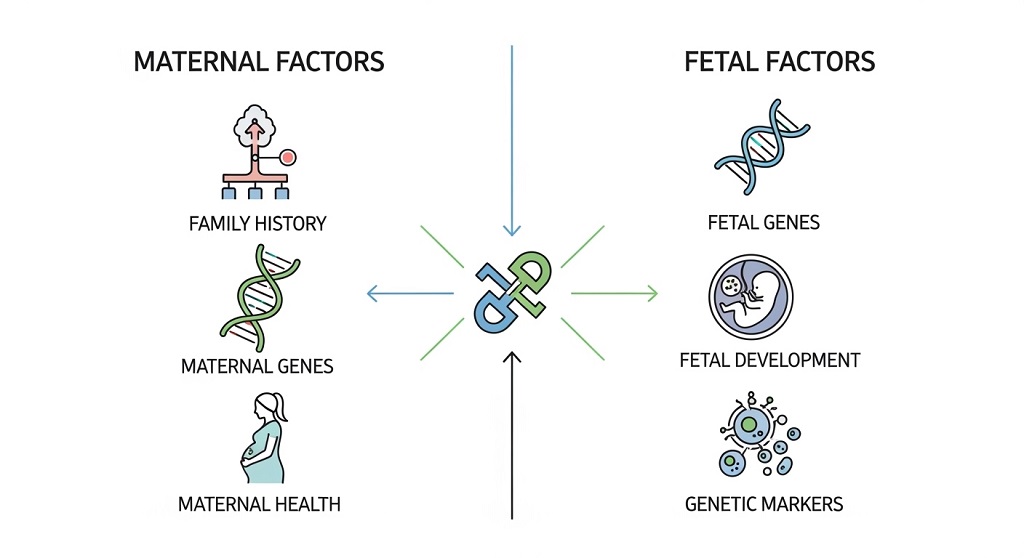
Clinicians assess genetic premature birth risk using family
history, obstetric history, cervical screening, and biomarker testing rather than relying on DNA tests alone.
A comprehensive evaluation combines multiple indicators.
Common clinical assessment tools
- Previous pregnancy outcomes
- Maternal birth history
- Cervical ultrasound measurements
- Inflammation markers
- Placental function assessment
This layered approach provides more accurate prediction than genetics alone.
Conclusion: What does genetic risk mean for pregnancy planning?
Genetics influences premature birth risk by shaping inflammation, hormone signaling, placental development, and cervical stability—but early screening and targeted care can reduce complications.
Understanding inherited susceptibility allows families and clinicians to move from uncertainty toward prevention. Family history awareness, early prenatal monitoring, and personalized care plans significantly improve outcomes even when genetic risk exists.
If premature birth runs in your family or occurred in a previous pregnancy, discussing risk evaluation with a healthcare provider early can help identify protective strategies before symptoms begin. Proactive planning is one of the most effective ways to support a full-term pregnancy.
National Institutes of Health (NIH) – .gov: The Role of Genetics in Preterm Birth — This establishes strong “Expertise” by providing deep scientific insight into pathways.
Frequently Asked Questions About Genetics and Premature Birth Risk
Can premature birth risk be inherited from the father?
Yes, paternal genes contribute through fetal DNA that influences placental signaling and developmental timing, although maternal genetic factors usually play a stronger role.
Is there a genetic test for predicting premature labor?
No single genetic test can predict premature labor yet, but emerging polygenic risk scoring tools are improving early risk identification.
Does having one premature baby increase risk in future pregnancies?
Yes, previous premature birth is one of the strongest predictors of recurrence because it often reflects underlying genetic or anatomical factors.
Are twins more affected by genetic premature birth risk?
Multiple pregnancies increase premature birth risk primarily due to uterine stretching, though genetic susceptibility can further influence timing.
Can stress activate genetic premature birth pathways?
Yes, stress-related hormone changes can interact with inflammatory gene pathways and increase the likelihood of early contractions.
Do genetic risks affect all pregnancies equally?
No, environmental conditions, maternal health, and prenatal care quality strongly influence whether genetic susceptibility leads to premature delivery.
Can early screening reduce complications from genetic premature birth risk?
Yes, cervical monitoring, infection screening, and progesterone therapy can lower complications when genetic risk is identified early.
Read More Also: How to Manage Post Knee Replacement Care While Traveling
Discover More: How to Protect Your Spine with the Right Office Chair



Leave a Reply