
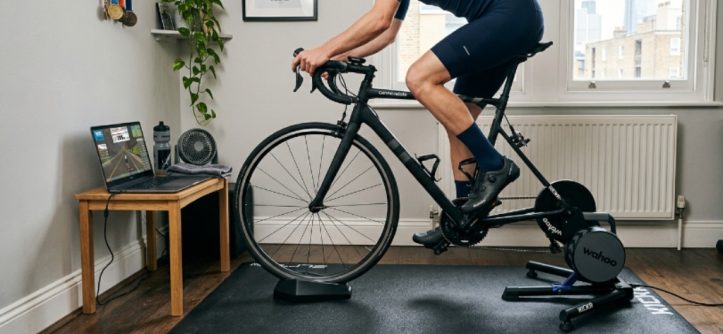
Living in an apartment should never stop you from getting a great cycling workout. Thousands of cyclists train indoors every day in small spaces, and many of them do it without disturbing their neighbours or damaging their floors. The secret often comes down to one piece of equipment that is easy to overlook: the bike trainer mat.
A good trainer mat does more than protect your floor. It absorbs vibration, reduces noise, and gives your bike a stable, secure surface to stand on. For apartment dwellers, these benefits are not just nice to have. They are essential. Without the right mat, even a moderate session on a turbo trainer can send vibrations through the floor and into the ceiling of the unit below.
This guide covers everything you need to know to find the best bike trainer mat for your space, your budget, and your neighbours’ sanity.
Why Bike Trainer Mats Matter More in Apartments
In a house, noise and vibration from a trainer are largely contained. Walls absorb sound, and there is no floor below yours to carry vibrations to another person’s home. In an apartment, the situation is entirely different.
Concrete and timber floors transmit vibration very efficiently. When your trainer hums and your bike rocks during a hard effort, that energy travels through the floor structure and radiates as noise into the rooms below. Even a smooth, quiet direct-drive trainer produces enough vibration to be heard one floor down.
A quality trainer mat acts as a buffer between your equipment and the floor. It absorbs and disperses vibrational energy before it can travel through the building. Therefore, investing in the right mat is not just about protecting your flooring. It is about being a considerate neighbour while still getting the training you need.
Additionally, mats prevent sweat from dripping onto your floor, keep your trainer from sliding during intense sprints, and protect hardwood, laminate, or tile from scratches and pressure marks. Every one of these benefits matters in a shared living environment.
Understanding Vibration and Noise in Apartment Cycling
Before looking at specific mats, it helps to understand where vibration and noise actually come from during an indoor cycling session.
Most of the noise comes from two sources. The first is the trainer itself. Wheel-on trainers, where your rear wheel presses against a resistance roller, generate the most noise. The tyre spinning against the roller creates friction noise that travels through the air and through contact with the floor. Direct-drive trainers are significantly quieter because they remove the rear wheel entirely, but they still transmit vibration through their frame.
The second source is your pedalling motion. Even on a perfectly smooth trainer, the act of pushing through each pedal stroke creates a rocking motion in the frame. This repetitive movement sends energy downward through the trainer feet and into the floor.
Vibration control starts at the contact point between the trainer and the surface beneath it. A dense, thick mat interrupts that transfer pathway. The energy that would otherwise travel into the floor is instead absorbed by the mat material and converted into heat. This is the core principle behind effective vibration control for apartment cycling setups.
Key Features to Look for in a Bike Trainer Mat
Not all trainer mats are built the same. Choosing the right one requires understanding what the key features actually do and which ones matter most for apartment use.
Thickness and Density
Thickness alone does not determine how well a mat absorbs vibration. Density matters just as much. A thin but very dense mat can outperform a thick but spongy one. For apartment use, look for mats that are at least 5 millimetres thick and made from high-density EVA foam or rubber. These materials compress under load but resist bottoming out, which is what keeps vibration from passing straight through.
Mats thicker than 8 millimetres offer excellent vibration absorption and are worth considering if noise complaints from neighbours are a genuine concern. However, very thick mats can make your bike feel slightly less stable if the foam is too soft. Balance thickness with density for the best result.
Size and Coverage
A mat that only covers your trainer footprint is not enough. Sweat drips beyond that area, and small movements during a session can shift your bike slightly. Look for a mat that extends at least 30 centimetres beyond your trainer on all sides.
Most purpose-built trainer mats measure around 90 by 180 centimetres, which is sufficient for most setups. If you use a floor fan or keep a water bottle and tablet within arm’s reach, a larger mat of around 100 by 200 centimetres gives you a more complete and tidy training zone.
Material Type
The two most common materials are EVA foam and rubber. EVA foam is lightweight, easy to roll up for storage, and resistant to moisture. It is the most popular choice for general use and works well for apartment fitness setup scenarios where portability matters.
Rubber mats are denser and heavier. They tend to absorb vibration more effectively than foam at the same thickness. They are also more durable and hold their shape better over time. However, rubber mats are harder to store, often heavier to move, and can have a strong odour when new that takes time to dissipate.
Some premium mats combine layers of foam and rubber, offering the benefits of both. These are often the best performers for apartment use, even though they come at a higher price point.
Surface Texture
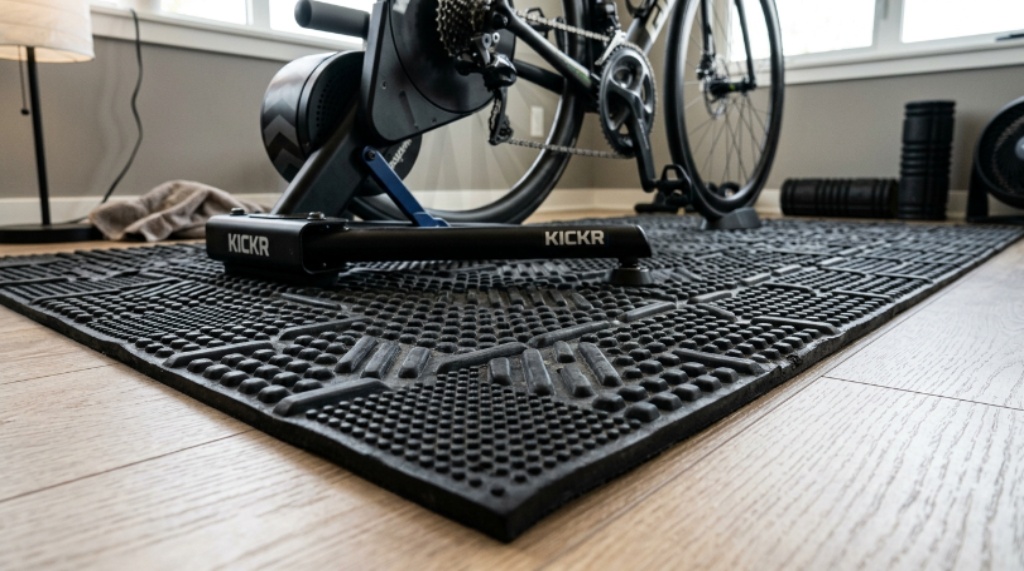
The surface texture of a mat affects both grip and sweat management. A mat with a slightly textured top surface grips your trainer feet more securely and prevents sliding during high-power intervals. It also makes it easier to wipe down after a sweaty session.
Avoid mats with deep grooves or patterns on the top surface, as these can trap moisture and become harder to clean. A subtle texture or a smooth but non-slip finish is ideal.
Types of Bike Trainer Mats and Who They Suit
There are several categories of trainer mats on the market. Understanding which type suits your situation helps you make a faster, more confident decision.
Purpose-Built Cycling Trainer Mats
These are designed specifically for turbo trainer use. They tend to be slightly thicker at the rear where the trainer contacts the floor and taper slightly toward the front wheel. This keeps your bike level despite the trainer raising the rear axle.
Purpose-built mats also typically include a cutout or channel for the front wheel, which stops the front end from rolling during the session. For apartment fitness setup configurations where space is tight, these mats are an efficient and well-considered solution.
General Fitness and Gym Mats
Thick gym floor mats can work as trainer mats, especially if they are made from high-density rubber or foam. They are often cheaper than cycling-specific options and available in larger sizes. However, they do not include the front wheel channel or the tapered thickness that purpose-built mats offer.
If you go this route, pair a general gym mat with a small riser block for your front wheel to keep your bike level. This combination can match the performance of a purpose-built mat at a lower overall cost.
Interlocking Foam Tiles
Interlocking EVA tiles are a popular option for apartment cyclists who want to cover a larger area without spending a lot of money. You can arrange them in any configuration, add or remove sections as needed, and store them flat against a wall when not in use.
The main limitation is thickness. Most interlocking tiles are 10 to 12 millimetres thick but relatively low in density. They provide decent sweat and scratch protection but offer less vibration absorption than denser mats. For quiet indoor cycling in an apartment on an upper floor, they may not be sufficient as a standalone solution.
Pairing Your Mat with Other Noise-Reduction Strategies
A trainer mat is the foundation of a quiet indoor cycling setup, but it works best when combined with other strategies.
Choosing a direct-drive trainer over a wheel-on model is the single biggest noise reduction you can make. Direct-drive trainers eliminate tyre noise entirely and are now available at increasingly accessible price points. If you are serious about quiet indoor cycling in an apartment setting, a direct-drive trainer paired with a quality mat makes an enormous difference.
A riser block for your front wheel should always be used with a trainer. It keeps the bike level and reduces the rocking motion that transmits vibration through the frame. Some riser blocks include their own anti-vibration layer, adding an extra buffer at the front contact point.
Smooth, butted tyres designed specifically for turbo trainers generate less noise than standard road tyres and wear far more slowly on a resistance roller. If you use a wheel-on trainer, a trainer-specific tyre is a worthwhile addition.
Lastly, scheduling your sessions during daytime hours, when ambient building noise is higher, reduces the perception of any vibration or sound that does pass through. This is not always possible, but it is worth considering if you have flexibility in your training schedule.
Conclusion
A bike trainer mat is one of the most practical investments you can make for apartment-friendly cycling. It absorbs vibration, protects your floor, prevents slipping, and makes your overall training environment cleaner and more stable.
For apartments specifically, prioritise mats made from high-density EVA foam or rubber with a thickness of at least 6 to 8 millimetres. Pair your mat with a direct-drive trainer and a front wheel riser for the most effective vibration control possible.
Quiet indoor cycling in a shared building is entirely achievable. The right mat, paired with smart equipment choices, allows you to train at full effort without worrying about the people below. With the options available today, there is no reason your apartment should limit the quality of your training.
Frequently Asked Questions
Do I really need a specific cycling trainer mat, or will any gym mat work?
A purpose-built cycling trainer mat offers features that general gym mats do not, such as a tapered profile to keep your bike level and a front wheel channel. However, a thick, high-density rubber gym mat can work well if you add a separate front wheel riser. The key factor is density, not the label on the product.
How thick should a trainer mat be for apartment use?
For apartment use, aim for a minimum of 6 millimetres of high-density foam or rubber. If you live on an upper floor or have noise-sensitive neighbours, 8 to 10 millimetres of dense material provides meaningfully better vibration absorption. Avoid very soft, spongy materials regardless of thickness.
Will a trainer mat completely eliminate noise for the people below me?
A mat significantly reduces vibration transfer but does not eliminate it entirely. Combining a mat with a direct-drive trainer and a front wheel riser provides the best possible noise reduction. Training during daytime hours also helps, as ambient building noise masks any remaining sound.
Can I use a yoga mat as a trainer mat?
A yoga mat is too thin and too soft to provide meaningful vibration control. It will protect your floor from light scratches and absorb some sweat, but it offers very little in terms of noise reduction. For apartment use, a dedicated trainer mat or a thick gym mat is a much better option.
How do I clean and maintain a bike trainer mat?
Wipe the mat down with a damp cloth after each session to remove sweat. For a deeper clean, use a mild soap and water solution and allow it to air dry completely before rolling or folding it. Avoid harsh chemical cleaners, as these can degrade EVA foam and rubber over time.



Leave a Reply